
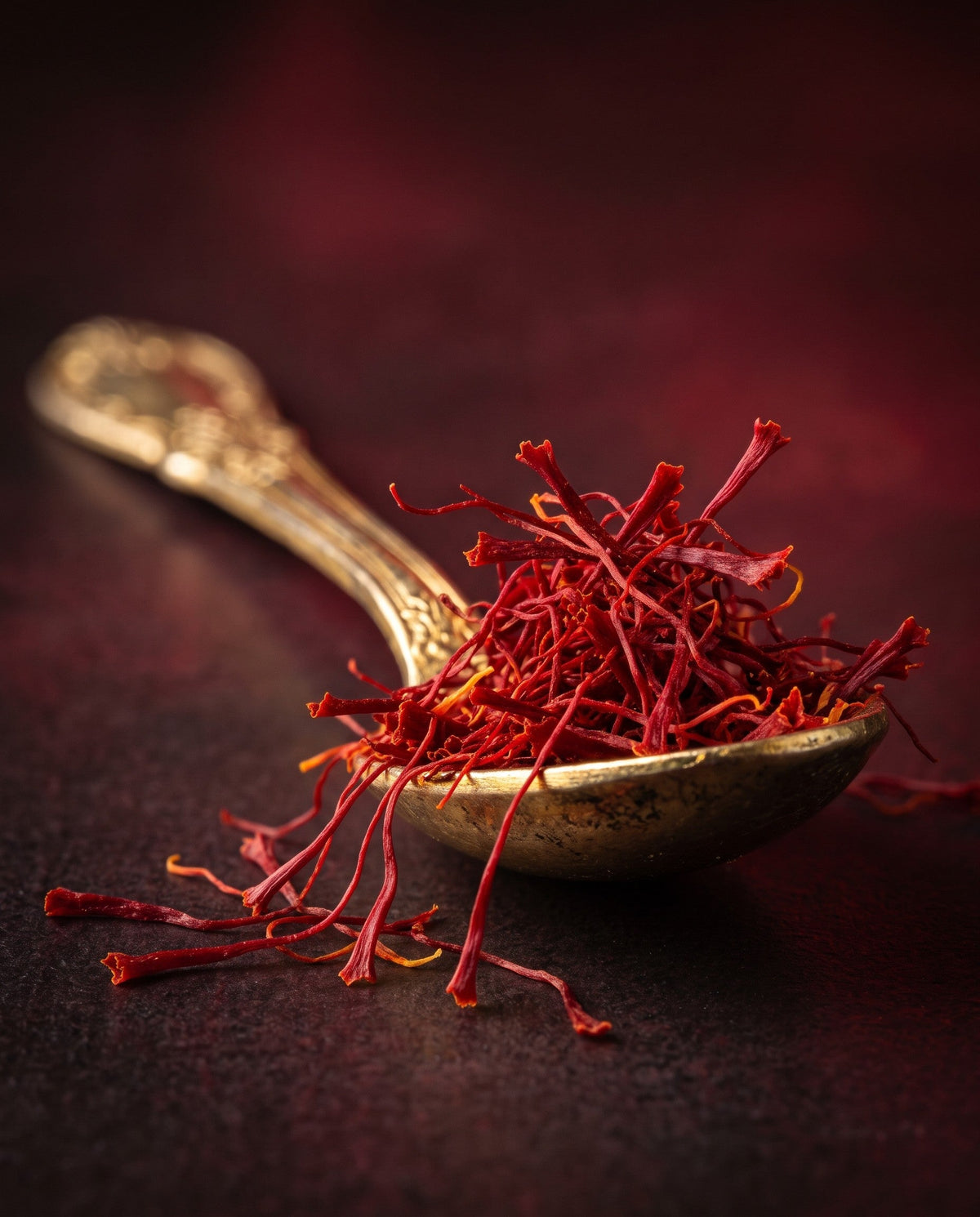
Each Crocus sativus flower gives only three stigmas, picked by hand. From there come the different grades of Iranian saffron: they are not different varieties, but different ways of separating and presenting the same part of the flower.
The four grades in brief
- Sargol: only the red part of the stigma, without the style. It is the most common grade for the kitchen.
- Negin: extra-long stigmas, whole and well spread. Chosen when the look of the threads matters too.
- Pushal: stigmas with a part of white-yellow style. More threads per gram, but the pale part doesn’t colour.
- Dasteh: whole filaments tied in a bunch, the most traditional form.
Which to choose
For home cooking Sargol is the most practical choice: everything you weigh is red part. For a risotto for 4 people about 0.15 g is enough, so one gram covers 25–35 servings.
For restaurants and pastry what counts is a consistent yield from one service to the next: better larger formats of the same grade and the same lot, so colour and aroma don’t change between orders.
For gifts or counter sales Negin has the most elegant look, in the producers’ original Iranian packs.
How to use it
Steep the threads in a little warm water for about 20 minutes and add them at the end of cooking, off the heat. Keep saffron in a closed container, away from light, heat and humidity.
Where to start
The Saffron Distribution saffron threads are available now, from the 5 g box to kilo formats, shipped within 48 hours from Italy or the Netherlands. The original Bahraman and Saffron Ghaenat packs are on pre-order. For restaurants, shops and distributors there is the tiered price list with samples.